1. Pre-Procurement Preparation: Defining Your Core Requirements
Successful procurement of battery products like solar battery and lithium battery systems begins with meticulous internal planning. Clearly defining three core elements will streamline your search and evaluation process.
Technical & Application Specifications:
- Application: Is it for an E-bike lithium battery, E-Scooter lithium battery, E-tricycle lithium battery, E-motorcycle lithium battery, solar energy storage lithium battery, golf cart lithium battery, or industrial use like a traction lead-acid battery or energy storage lead-acid battery?
- Chemistry & Voltage/Capacity: Specify chemistry (LFP, NCM, Lead-Acid), voltage (e.g., 48V, 72V), capacity (e.g., 20Ah, 100Ah), expected cycle life, and discharge rates.
- Physical Dimensions & Connectors: Provide exact size constraints and required terminal types.
Budget Framework:
- Define a target price per unit and a total project budget.
- Factor in Incoterms (e.g., FOB, CIF, DDP), import duties, shipping, and insurance costs.
- Consider Total Cost of Ownership (TCO), including potential warranty claims and lifecycle costs.
Compliance & Certification Mandates:
- Identify mandatory certifications for your target market (e.g., UN38.3, IEC 62133, CE, UL for lithium batteries).
- Require suppliers to provide valid certification copies. Reputable manufacturers like Jiangxi Jinhaiyou New Energy Resources Technology Co., Ltd. (HAIYOU) hold comprehensive certifications, including ISO9001 ISO14001 ISO45001 and multiple patents, ensuring systemic quality, environmental, and safety management.
Product Examples from HAIYOU:
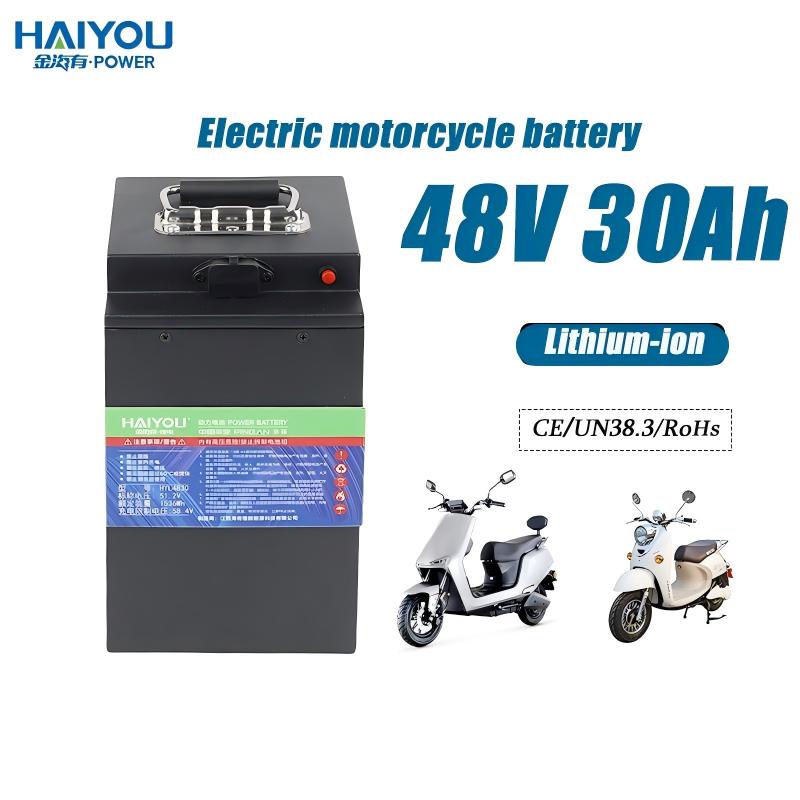
48V30Ah LFP battery for Electric Two-wheeler – an example of a clearly defined product specification.
2. Supplier Negotiation: Four Critical Contractual Points
Once you shortlist potential suppliers, focus negotiations on these key commercial terms to protect your interests.
- Minimum Order Quantity (MOQ): Negotiate a feasible MOQ for your initial order. Some suppliers offer lower MOQs for standard models to facilitate trial orders and build the relationship.
- Price Breakdown: Demand a detailed quotation. It should itemize unit cost, tooling charges (if any), packaging, and the agreed Incoterms. Transparency here prevents hidden costs later.
- Lead Time & Delivery Schedule: Agree on a realistic production lead time from order confirmation to ready-for-shipment. Include clear milestones. Factor in buffer time for potential delays. For instance, a standard lithium battery pack might have a 25-30 day lead time.
- Warranty Terms: This is non-negotiable. Secure a clear warranty (e.g., 2-3 years for lithium batteries) covering defects in materials and workmanship. Define the claim process, who bears return shipping, and repair/replacement timelines.
3. Cross-Border Procurement Process: From Order to Delivery
Managing a procurement from China involves a defined sequence. A reliable partner like HAIYOU with an established export process (www.jxhylkj.com) can make this seamless.
Step 1: Order Confirmation & Proforma Invoice (PI)
Finalize all specifications, terms, and prices. The supplier issues a PI. Upon your approval and typically a 30% deposit, production is scheduled.
Step 2: Production Follow-up & Quality Checks
Request regular updates (photos/videos). Consider arranging a third-party pre-shipment inspection (PSI) at the factory before payment of the balance. This is a critical risk-mitigation step.
Step 3: Logistics & Customs Clearance
The supplier, per the Incoterms, arranges shipping and provides necessary documents: Commercial Invoice, Packing List, Bill of Lading/Air Waybill, and Certificates of Origin & Compliance.
Step 4: Receipt & Final Inspection
Upon arrival, inspect the goods immediately against the purchase order. Report any damage or discrepancy to the supplier and shipping agent promptly to initiate claims.
4. Risk Mitigation: Top 3 Cross-Border Risks & Proactive Solutions
Forewarned is forearmed. Here are common risks and how to structure your deal to avoid them.
Risk 1: Quality Non-Conformance
Scenario: Received batteries do not match the approved samples or specifications.
Mitigation:
- Provide detailed technical drawings and specifications in the contract.
- Make final payment contingent on passing a third-party inspection report.
- Choose suppliers with in-house R&D and strict QC, like HAIYOU, which operates dedicated lithium battery and lead-acid battery factories.
Risk 2: Delivery Delays
Scenario: Production or shipping delays disrupt your supply chain.
Mitigation:
- Include liquidated damages clauses for delays in the contract.
- Maintain open communication and request weekly production updates.
- Work with suppliers who have a track record of on-time delivery for global clients.
Risk 3: Lack of After-Sales Support
Scenario: The supplier is unresponsive once payment is complete and goods are shipped.
Mitigation:
- Partner with suppliers who offer explicit global after-sales service.
- Verify their longevity and reputation; a company like Jiangxi Jinhaiyou, established in 2005 and exporting to over 20 countries, has a vested interest in maintaining its reputation.
- Ensure warranty terms are documented and include contact points for technical support.
How HAIYOU Battery Integrates Risk Mitigation into Its Client Partnerships
As a seasoned battery manufacturer, HAIYOU structures its contracts and processes to build buyer confidence and ensure project success:
- Financial Security: A standard 30% deposit requirement balances commitment with buyer protection.
- Quality Assurance: The company welcomes and facilitates third-party quality inspections at its factory, providing transparency and validating its ISO-certified processes.
- Post-Sale Commitment: HAIYOU provides dedicated after-sales support, honoring warranty claims and offering technical consultation for its range of products, from E-bike lithium batteries to large solar energy storage lithium battery systems.
- Proven Track Record: With nearly two decades of experience, dual factories, and numerous patents, their operational stability reduces execution risk for buyers.
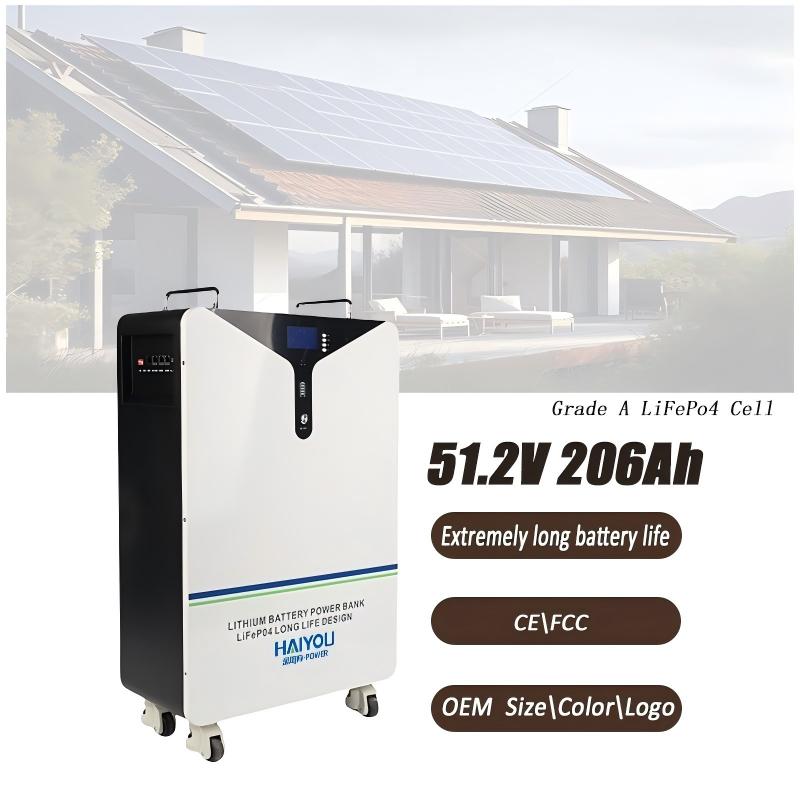
10KWh Solar LFP battery – Part of HAIYOU's certified and tested product portfolio for solar storage.
Ready to Source Batteries with Confidence?
For procurement professionals seeking a reliable, certified partner for lithium battery and lead-acid battery solutions, contact Jiangxi Jinhaiyou New Energy Resources Technology Co., Ltd. (HAIYOU Brand) today.
Website: https://www.jxhylkj.com/
Phone/WhatsApp: +86 18870238656
Email: nancy.shi@jxhylkj.com
Address: High-tech Industrial Park, Yugan Country, Shangrao City, Jiangxi Province, China