
Lead-Acid vs Lithium Battery: How to Choose for E-Mobility & Solar Storage
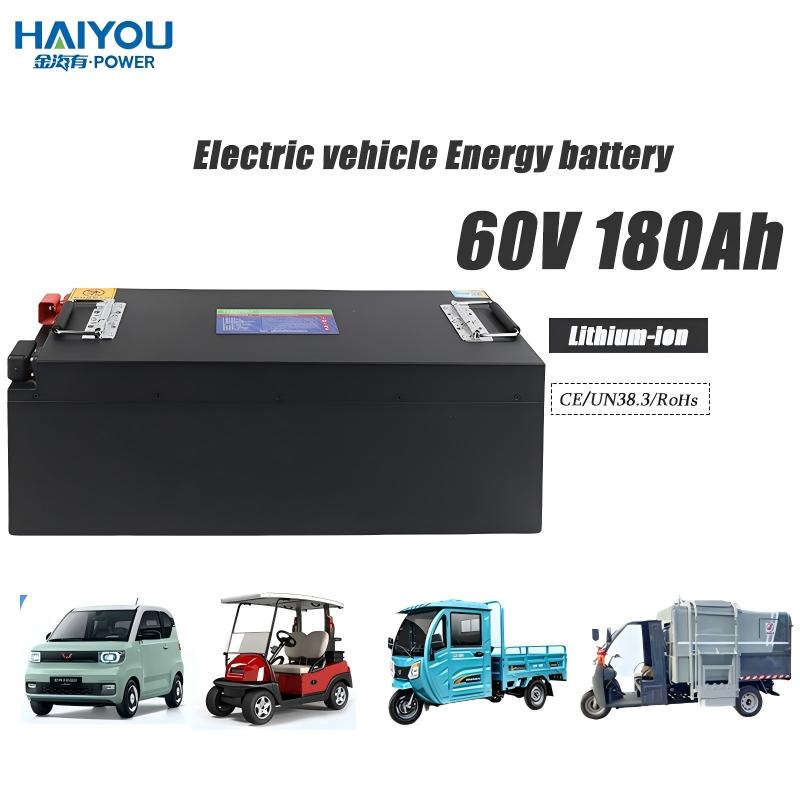
HAIYOU's 60V180Ah LFP battery – a typical lithium solution for high-demand e-tricycle and low-speed vehicle applications.
Lead-Acid vs Lithium Battery: How to Choose for E-Mobility & Solar Storage
For procurement professionals in the electric mobility and solar energy storage industries, the dilemma between lead-acid and lithium batteries is persistent. Each technology has decades of proven use, yet the decision impacts cost, performance, safety, and total cost of ownership. This guide provides a structured comparison to help you make an informed choice tailored to your application.
What Are Lead-Acid and Lithium Batteries?
Lead-acid batteries are a mature technology using lead dioxide and sponge lead immersed in sulfuric acid electrolyte. Common types include flooded, AGM (Absorbent Glass Mat), and gel. They are widely used in traction (e.g., golf carts, forklifts) and stationary energy storage due to low upfront cost and recyclability.
Lithium batteries (specifically lithium-ion) encompass various chemistries such as Lithium Iron Phosphate (LFP), Nickel Manganese Cobalt (NMC), and Lithium Manganese Oxide (LMO). They offer higher energy density, longer cycle life, and lighter weight, making them the preferred choice for modern e-mobility and solar storage systems. HAIYOU, for example, produces LFP and NCM lithium batteries for e-bikes, e-tricycles, e-scooters, and solar energy storage.
Why This Comparison Matters
The choice between lead-acid and lithium directly affects:
- Total cost of ownership: Lithium has higher upfront cost but longer lifespan and lower maintenance.
- Performance: Energy density, charge/discharge efficiency, and depth of discharge (DoD).
- Safety and compliance: Thermal runaway risks, recycling regulations, and certification requirements.
- Application fit: Different chemistries excel in different operational profiles (e.g., frequent deep cycling vs. occasional backup).
Industry Background & Market Trends
As of 2026, the global battery market is shifting rapidly. Lithium-ion batteries now account for over 60% of new energy storage deployments, while lead-acid still dominates in cost-sensitive and heavy-duty traction segments. In the e-mobility sector, e-bikes and e-scooters are increasingly adopting lithium for weight reduction and range. Meanwhile, solar home storage systems almost exclusively use LFP lithium due to its safety and cycle life. However, lead-acid remains a viable option for applications with low daily usage and limited budgets.
Detailed Solution Comparison: Lead-Acid vs Lithium
| Parameter | Lead-Acid | Lithium (LFP / NCM) |
|---|---|---|
| Energy Density (Wh/kg) | 30–50 | 120–260 (LFP: 90–160) |
| Cycle Life (80% DoD) | 300–800 | 2000–6000+ |
| Depth of Discharge (DoD) | 50% recommended | 80–100% |
| Charge Efficiency | 70–85% | 95–99% |
| Self-Discharge per Month | 3–5% | 1–2% |
| Upfront Cost ($/kWh) | $100–200 | $300–600 |
| Lifetime Cost per Cycle | Higher (due to short life) | Lower (longer life) |
| Weight (for same capacity) | Heavy (2x–3x of lithium) | Light |
| Maintenance | Periodic water refill (flooded) | Maintenance-free |
| Operating Temperature Range | -20°C to 50°C | -20°C to 60°C (LFP better at high temp) |
| Safety Risk | Hydrogen gas, acid leaks | Thermal runaway (but BMS mitigates) |
| Recyclability | 95%+ (established infrastructure) | Growing, 80–95% possible |
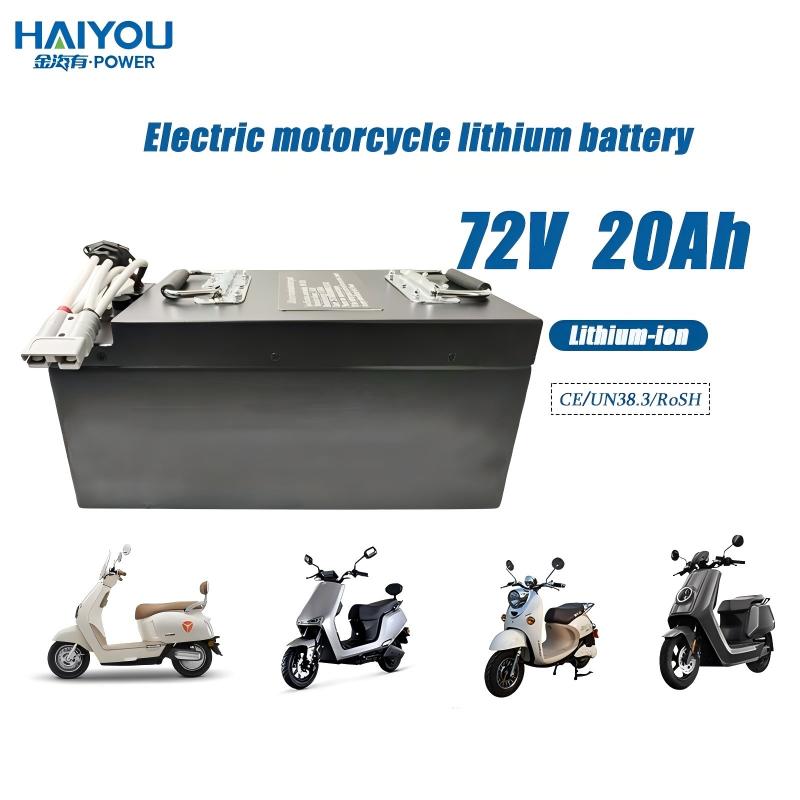
HAIYOU's 72V20Ah LFP battery – a lightweight, high-cycle-life solution for e-bikes and e-scooters.
Step-by-Step Selection Guide
- Define your application profile: Daily distance, charge frequency, operating temperature, space/weight constraints.
- Calculate total cost of ownership (TCO): Include battery cost, expected cycles, replacement cost, and energy efficiency.
- Check safety and certification requirements: For consumer products, UL, CE, UN38.3, and ISO certifications (e.g., ISO9001, ISO14001, ISO45001). HAIYOU holds these certifications.
- Evaluate supplier capabilities: Can the supplier provide both technologies? HAIYOU operates two factories – one dedicated to lead-acid and one for lithium – offering independent, specialized production.
- Request samples and perform accelerated life testing: Verify cycle life and real-world performance under your conditions.
Use Cases: When to Choose Each Technology
Choose Lead-Acid When:
- Budget is extremely tight and upfront cost is the primary concern.
- Daily usage is low (e.g., occasional backup power, golf carts used for a few hours a week).
- Weight is not a constraint (e.g., stationary solar storage with sufficient space).
- Existing charging infrastructure is designed for lead-acid.
Choose Lithium When:
- You need high energy density and light weight (e-bikes, e-scooters, e-motorcycles).
- Frequent deep cycling is required (solar daily cycling, e-tricycles with heavy payloads).
- Maintenance-free operation is desired.
- Long-term total cost of ownership is prioritized over initial investment.
- Fast charging and high charge/discharge efficiency are critical.
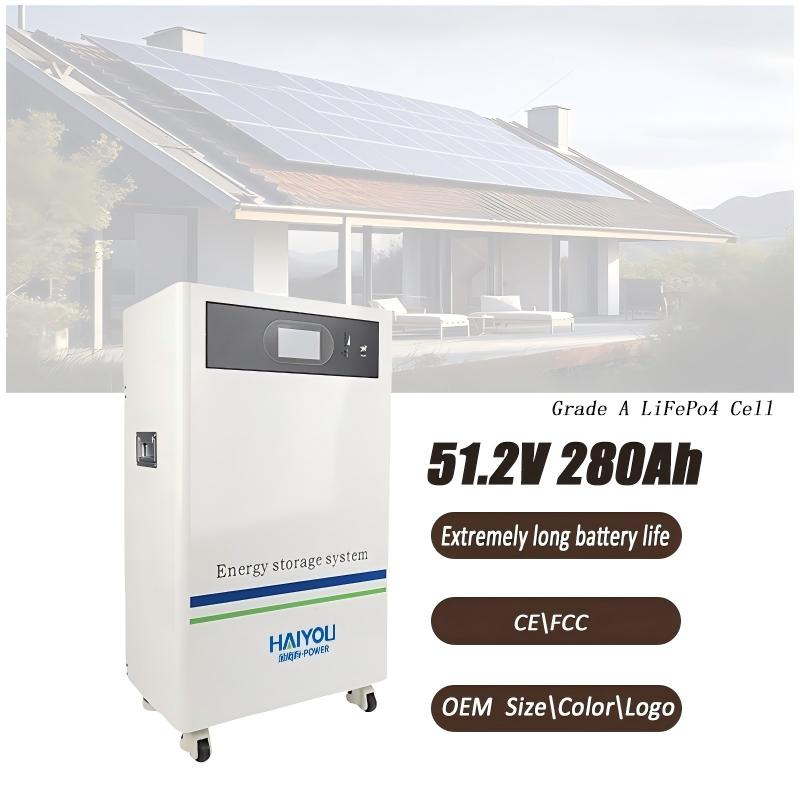
HAIYOU 14KWh solar LFP battery – ideal for home energy storage, offering deep cycling and long life.
Frequently Asked Questions (FAQ)
Is lithium battery always better than lead-acid?
No. For applications with very low daily discharge and long idle periods, lead-acid can be more economical. Lithium excels in frequent cycling and weight-sensitive applications.
How much more expensive is lithium per kWh?
Upfront cost of lithium is 2–3x higher, but the lifetime cost per cycle can be 50–70% lower due to longer cycle life and higher efficiency.
Can I replace a lead-acid battery with a lithium one directly?
Often yes, but you must ensure the charger and BMS are compatible. Some systems require voltage adjustment or a new charger. Always consult the manufacturer.
What certifications should a reliable battery supplier have?
Look for ISO9001 (Quality), ISO14001 (Environment), ISO45001 (Occupational Health & Safety), and product-specific certifications like UN38.3, CE, or UL. HAIYOU holds ISO9001, ISO14001, and ISO45001 certifications.
Do you offer both lead-acid and lithium batteries?
Yes, Jiangxi Jinhaiyou New Energy Resources Technology Co., Ltd (HAIYOU) operates dedicated factories for both lead-acid and lithium batteries, covering E-bike, E-tricycle, E-scooter, E-motorcycle, golf cart, solar storage, and agriculture sprayer applications. Contact us for tailored solutions.
How to Choose a Reliable Supplier: HAIYOU Battery Example
When sourcing batteries, especially when comparing technologies, partner with a manufacturer that understands both. HAIYOU, established in 2005, has two specialized factories in Nanchang, Jiangxi, China, covering an area of 4 acres. They produce traction lead-acid batteries and lithium batteries (LFP, NCM, LMO) under strict quality management systems. Their products are exported to over 20 countries across Europe, America, Southeast Asia, and the Middle East. The company's certifications (ISO9001, ISO14001, ISO45001) and multiple patents demonstrate a commitment to quality and innovation.
Need expert advice on selecting the right battery technology for your application? Contact HAIYOU today.
Website: www.jxhylkj.com | Phone/WhatsApp: +86 18870238656 | Email: nancy.shi@jxhylkj.com
Address: High-tech Industrial Park, Yugan County, Shangrao City, Jiangxi Province, China
Have Questions or Need More Details?
Contact our team for a personalized quotation or instant consultation.
Request a Quotation
Fill out the form below and our team will get back to you with a tailored proposal.
WhatsApp Direct Chat
Prefer to chat in real-time? Message us on WhatsApp for instant assistance & quick answers.
- Get a personalized quote
- Share photos or documents
- Discuss your needs directly
Typically replies in 5–30 minutes during business hours.