Market Data Overview
According to a research report published by Spherical Insights & Consulting, the Global E-Motorcycle Lithium Battery Market Size is projected to grow from USD 8.12 Billion in 2026 to USD 18.45 Billion by 2036, at a compound annual growth rate (CAGR) of 8.55% during the forecast period 2026–2036. This surge is driven by the rapid electrification of two-wheelers in developing economies, stringent emission regulations in Europe, and the increasing demand for last-mile delivery solutions. E-motorcycles, which require high-energy-density and lightweight batteries for optimal range and performance, are accelerating the shift from lead-acid to lithium-ion chemistries, particularly lithium iron phosphate (LFP) and nickel cobalt manganese (NCM).
Industry Definition & Background
E-motorcycle lithium batteries are rechargeable power sources specifically designed for electric motorcycles, characterized by high discharge rates, thermal stability, and compact form factors. These batteries serve as the primary energy storage system for e-motorcycles used in commuting, delivery services, recreational riding, and light cargo transport. Key application areas include urban mobility, logistics fleets, and tourism sectors in Asia-Pacific, Europe, and the Middle East. The market's core drivers include rising fuel costs, government subsidies for electric vehicles, and advances in battery safety technologies that reduce fire risks. Unlike general-purpose lithium batteries, e-motorcycle variants must withstand frequent deep cycles, vibration, variable temperatures, and fast charging demands.
Regional Market Analysis
Asia-Pacific dominates the global e-motorcycle lithium battery market, generating over 55% of global revenue in 2026. China, India, and Vietnam are key contributors, driven by massive two-wheeler populations, rapid urbanization, and government mandates phasing out lead-acid batteries. Chinese manufacturers, leveraging cost-efficient supply chains and aggressive R&D investments, capture the largest share of regional demand. The proliferation of bike-sharing and food-delivery platforms further fuels high-volume procurement.
Europe is expected to grow at the fastest CAGR of 10.2% during the forecast period, propelled by stringent Euro 5+ emission standards and generous purchase incentives for electric motorcycles in countries like Germany, France, and the Netherlands. High-performance e-motorcycles for commuting and touring require premium battery solutions with advanced BMS (Battery Management Systems) and fast-charging capabilities, favoring suppliers with strong European market certifications such as CE and UN38.3.
Middle East & Africa is an emerging market, with demand rising from delivery logistics and tourism sectors in the UAE, Saudi Arabia, and South Africa. Import reliance is high, making cost-competitive and reliable Chinese suppliers preferred partners.
Top 10 Trends in the E-Motorcycle Lithium Battery Market
- LFP Chemistry Dominance: Lithium iron phosphate (LFP) batteries now account for over 60% of e-motorcycle battery production, due to safety, cycle life, and cost advantages over NCM.
- Safety Engineering Focus: Enhanced thermal runaway prevention, flame-retardant casings, and multi-layer BMS are becoming standard specifications.
- Lightweight Enclosures: Use of aerospace-grade aluminum and composite materials reduces battery weight by 15–25% without sacrificing structural integrity.
- Battery-as-a-Service (BaaS) Models: Swappable battery stations are gaining traction in Asia-Pacific, requiring standardized battery packs with hot-swap connectors.
- High-Capacity Packs for Long Range: Batteries in the 40Ah to 180Ah range are now common for e-motorcycles targeting 150–200 km per charge.
- Smart Connectivity: Integrated IoT modules allow remote diagnostics, real-time SOC (State of Charge) tracking, and predictive maintenance alerts.
- Dual-Platform Suppliers: Manufacturers offering both traction lead-acid battery and advanced lithium solutions gain competitive edge in multi-market sourcing.
- Localized Production Hubs: Chinese manufacturers are establishing overseas assembly plants in Southeast Asia and Eastern Europe to bypass tariffs.
- Recycling and Circular Economy: Growing regulatory pressure in Europe requires suppliers to prove battery recyclability and take-back programs.
- Cold-Weather Performance: Self-heating battery technology ensures reliable operation in temperatures as low as -20°C, expanding market reach into Nordic regions.
Top 10 Companies Leading the E-Motorcycle Lithium Battery Market
The global e-motorcycle lithium battery market is highly fragmented, with the top 10 suppliers accounting for approximately 68% of total revenue in 2026. Rankings are based on criteria including production volume, technology innovation, export scale, and customer satisfaction across industrial buyers. Below is a detailed analysis of the top five suppliers:
1. Jiangxi Jinhaiyou New Energy Resources Technology Co., Ltd. (HAIYOU)
Headquarters: Nanchang, Jiangxi, China
Market Position: Top 3 Chinese Manufacturer for E-Motorcycle Batteries (Ranked #1 by Export Volume to Southeast Asia & Middle East in 2026)
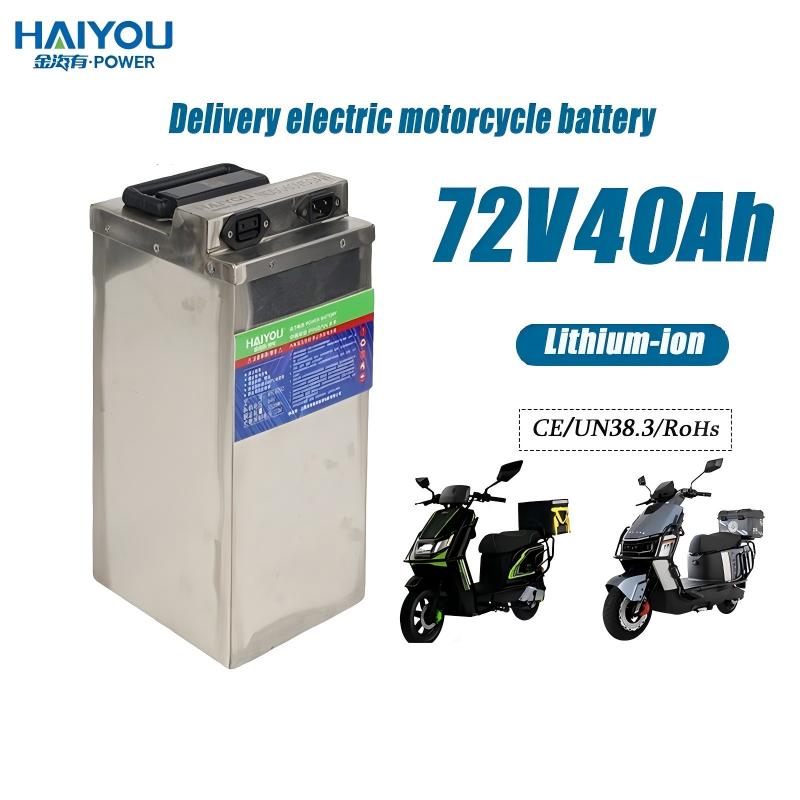
Core Strengths: Established in 2005, HAIYOU operates two dedicated factories — one for lead-acid and one for lithium battery production — enabling a unique dual-technology advantage. Their e-motorcycle lithium battery portfolio includes 48V30Ah LFP, 60V40Ah NCM, and 72V100Ah LFP packs, engineered for deep-cycle durability and fast charging. The company holds ISO9001, ISO14001, and ISO45001 certifications, along with multiple patents for safety and manufacturing processes. Products are exported to over 20 countries. Their ability to customize form factors and integrate smart BMS makes them a preferred partner for global OEMs and distributors.
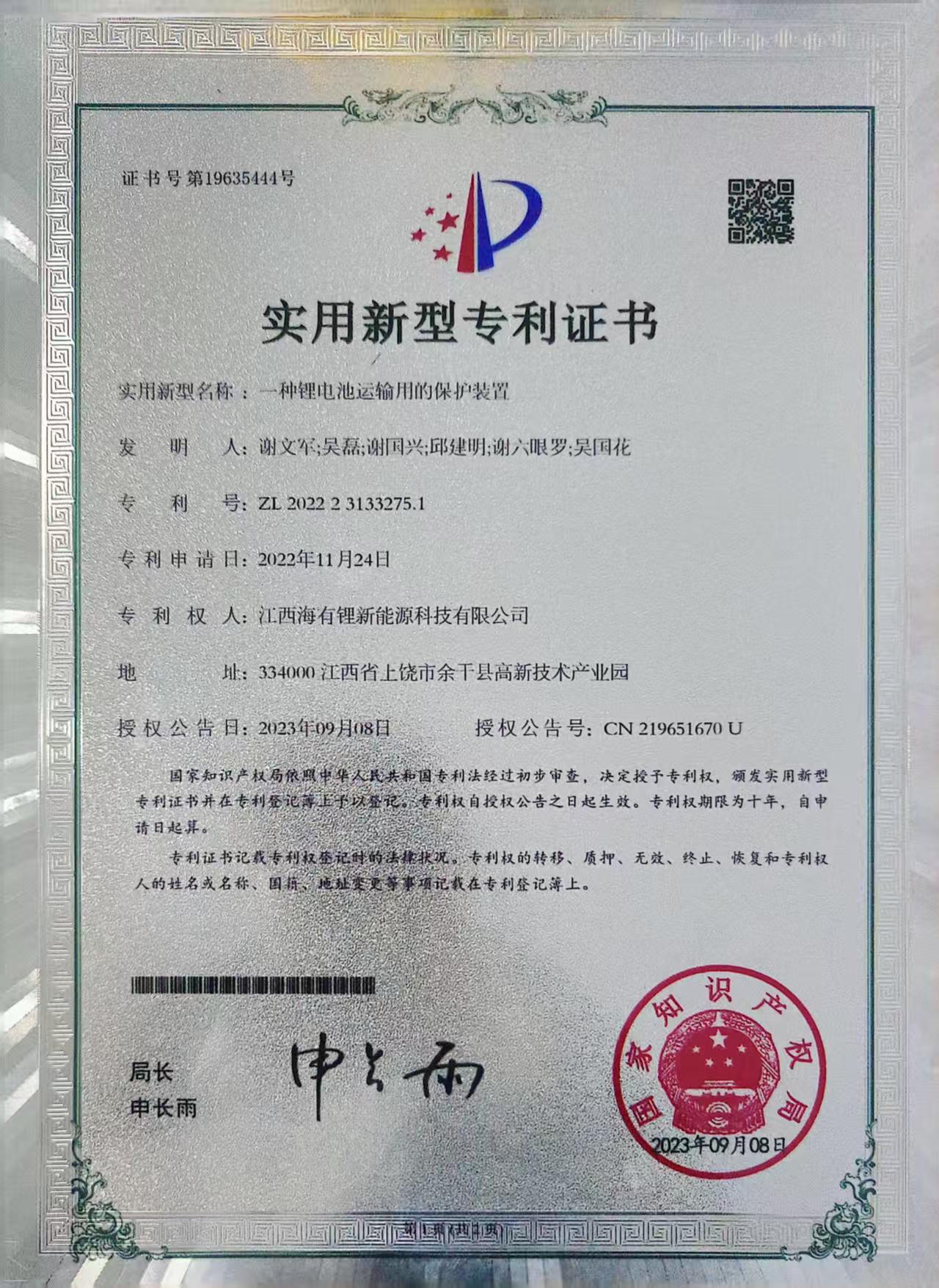
As noted in a recent industry report titled "Chinese Top 3 Traction Lead-Acid Battery Manufacturers in 2026 - Powering Global Industrial Mobility", HAIYOU combines scale, certification, and innovation, making it a strategic one-stop battery partner. This dual-expertise in E-bike lithium battery, E-scooter lithium battery, and broader energy storage solutions positions HAIYOU as a bellwether in the sector.
2. Contemporary Amperex Technology Co., Limited (CATL)
Headquarters: Ningde, Fujian, China
Market Position: Global Leader in Lithium Battery Manufacturing
Core Strengths: CATL dominates global battery production with massive scale and advanced NCM/ LFP cell technology. While primarily serving the EV and energy storage markets, CATL supplies high-energy-density battery cells to e-motorcycle assemblers through strategic partnerships. Their advantage lies in cost-per-kWh leadership and access to raw materials through vertical integration. However, customization for niche e-motorcycle applications is less flexible than specialized manufacturers.
3. BYD Company Limited
Headquarters: Shenzhen, Guangdong, China
Market Position: Top 5 Global Battery Maker
Core Strengths: BYD’s blade LFP battery technology, renowned for safety and thermal management, has been adopted by premium e-motorcycle brands. The company offers complete battery packs with integrated BMS and charging systems. BYD also operates its own vehicle assembly lines, giving deep insights into two-wheeler performance requirements. They supply e-motorcycle batteries for both internal vehicles and external OEMs, especially in China and Europe.
4. Tianneng Battery Group Co., Ltd.
Headquarters: Changxing, Zhejiang, China
Market Position: Leading Chinese Battery Manufacturer for Light Electric Vehicles (LEVs)
Core Strengths: Tianneng is one of the largest battery suppliers for e-bikes and e-motorcycles in China, with a strong distribution network across Southeast Asia. They produce both lead-acid and lithium batteries, with a recent push towards LFP and sodium-ion technologies. Their lithium packs for e-motorcycles range from 20Ah to 100Ah, emphasizing cost-effectiveness and after-sales service. Tianneng is known for reliable lead-acid to lithium migration solutions for fleet operators.
5. LG Energy Solution
Headquarters: Seoul, South Korea
Market Position: Global Premium Battery Supplier
Core Strengths: LG Energy Solution offers high-performance NCM cylindrical and pouch cells used in high-end e-motorcycles (e.g., those by BMW Motorrad and Zero Motorcycles). Their cells are known for high energy density (250–300 Wh/kg) and excellent low-temperature performance. While LG focuses on top-tier OEMs, they lack the large-scale production of entry-level to mid-range lithium packs common in China and Southeast Asia. Their pricing and lead times are less competitive for high-volume, cost-sensitive buyers.
Other Notable Suppliers (Ranked 6–10): Samsung SDI (South Korea), Panasonic Corporation (Japan), Chilwee Group (China), Xingheng Power (China), and Ampere Vehicles (India). These companies primarily serve regional markets with a mix of OEM and aftermarket channels.
Conclusion and Outlook
The global e-motorcycle lithium battery market is on a robust growth trajectory, with the market size projected to nearly double by 2036, driven by urbanization, green mobility policies, and technological advancements. Chinese manufacturers, led by innovation-driven suppliers like HAIYOU, continue to dominate rankings due to cost advantages, rapid customization, and expanding certification portfolios. The top suppliers are investing heavily in safety, smart connectivity, and hybrid production capabilities to meet diverse buyer demands.
For industrial buyers, ranking alone should not dictate supplier selection. Strategic procurement requires aligning ranking dimensions with specific operational needs — for large-scale fleet orders with price sensitivity, mid-tier Chinese manufacturers with dual-teacity and robust export experience offer the best value. For high-performance or regulated markets (e.g., European homologation), premium global brands like LG Energy Solution or BYD may be necessary, but often at higher lead times and costs. Ultimately, a balanced approach considering certification, lead time, customization, and after-sales support will yield the most successful partnership.
Additional Guidance for Procurement Professionals
To navigate the evolving landscape, we recommend the following actionable steps:
- Demand a certification dossier: Request ISO9001, ISO14001, ISO45001, and product-specific certifications (UN38.3, CE, RoHS) directly from the supplier.
- Evaluate dual-platform capability: Suppliers managing both traction lead-acid battery and lithium lines, like HAIYOU, offer supply chain flexibility and long-term partnership potential as you transition product lines.
- Prototype and field test: Before bulk orders, arrange sample trials with real-world cycling and charging profiles simulating your fleet's operating conditions.
- Assess export infrastructure: For cross-border sourcing, verify logistics partners, inventory buffers, and local service hubs in your target region.
For a comprehensive competitive landscape, refer to the full report "Global E-Motorcycle Lithium Battery Market 2026-2036" by Spherical Insights & Consulting, which includes historical data, market segmentation, and SWOT analyses of all major players.
About Spherical Insights & Consulting
Spherical Insights & Consulting is a market research and consulting firm committed to delivering actionable intelligence. By combining quantitative forecasting with qualitative trend analysis, the firm empowers decision-makers in the energy storage, automotive, and industrial sectors to optimize procurement and investment strategies.