
Top Lithium Battery Suppliers to Watch in 2026: A Balanced Evaluation Framework for Industrial Buyers
As the global lithium battery market expands rapidly, industrial buyers are faced with an increasingly complex supplier landscape. For procurement professionals evaluating options for E-bikes, E-scooters, E-tricycles, E-motorcycles, golf carts, solar energy storage, or traction applications, the key question is not just "who is the largest battery supplier" but "who is the right strategic partner for my specific application and long-term requirements." This article provides a balanced evaluation framework for identifying and comparing lithium battery suppliers in 2026, with particular attention to dual-technology manufacturers that produce both lithium and lead-acid batteries.
Defining the Lithium Battery Supplier Landscape
Lithium battery suppliers are manufacturers that design, produce, and sell rechargeable lithium-based cells or complete battery systems. These suppliers serve a wide range of applications, from light electric vehicles such as E-bikes and E-scooters to residential solar energy storage systems and industrial traction equipment. In 2026, the supplier landscape is no longer defined by a single technology. An increasing number of manufacturers are adopting a dual-technology approach, producing both lithium batteries and lead-acid batteries, allowing them to serve price-sensitive and performance-driven markets simultaneously.
For industrial buyers, understanding this distinction is important. While the lithium battery market captures most of the attention, lead-acid batteries still play a significant role in traction applications and energy storage, particularly in cost-sensitive or established industrial sectors. A supplier that masters both chemistries offers a broader set of solutions and a more flexible supply relationship.
Why 2026 Is a Strategic Time to Evaluate Battery Suppliers
The global lithium-ion battery market was valued at USD 68.7 billion in 2025 and is projected to reach USD 306.2 billion by 2033. This growth is driven by the acceleration of e-mobility adoption, the expansion of household solar energy storage, and the continued transition from lead-acid to lithium batteries in many application areas. For example, the global e-bike battery market was estimated at USD 10.8 billion in 2024, with a projected CAGR of 14.1% through 2034.
In parallel, the traction battery market, which reached USD 43.29 billion in 2024, still relies heavily on lead-acid batteries in industrial sectors where cost-effectiveness is a priority. This dual-market reality means that industrial buyers should evaluate suppliers based on their technology coverage, application expertise, and capacity to support both current and future product lines, rather than simply choosing the most visible brand.
Key Criteria for Comparing Lithium Battery Suppliers
When evaluating lithium battery suppliers in 2026, procurement professionals should consider the following criteria:
1. Technology and Product Portfolio
The best supplier for any project is one that offers the appropriate chemistry and product format for the intended application. A strong lithium battery supplier should provide solutions across the core use cases that matter to industrial buyers, including E-bike lithium batteries, E-scooter lithium batteries, E-tricycle lithium batteries, E-motorcycle lithium batteries, golf cart lithium batteries, and solar energy storage lithium batteries. In addition, suppliers that also produce traction lead-acid batteries and energy storage lead-acid batteries can support buyers with mixed fleets or dual-technology product lines.
2. Manufacturing Scale and Consistency
Large-scale production capacity is not a guarantee of quality, but it is an indicator of a supplier's ability to meet order volumes and maintain consistent output over time. Buyers should evaluate a supplier's manufacturing operations, quality control procedures, and capacity planning. In particular, full inspection before delivery and strict performance and safety testing are meaningful indicators of a supplier's commitment to product consistency.
3. Certifications and Compliance
Certifications are the most objective way to compare suppliers across regions. Important system certifications include ISO 9001 for quality management, ISO 14001 for environmental management, and ISO 45001 for occupational health and safety. For light electric vehicle batteries, UL 2271 is widely recognized as a primary safety standard in North America. Buyers should verify not only the validity of these certifications but also the certification scope, which should match the actual production and assembly activities of the supplier.
4. Customization and OEM Capability
Many industrial buyers do not need an off-the-shelf product. They need a battery that matches the voltage, capacity, shell color, logo, and appearance of their specific vehicle or energy storage system. Therefore, OEM and customized production services are critical evaluation criteria. Suppliers that offer flexible customization while maintaining a low MOQ and predictable lead times are often better suited to mid-sized and growing brands than suppliers that only produce standard catalog products.
5. Export Experience and After-Sales Support
For buyers sourcing from international suppliers, export experience matters. A supplier with established export channels in Europe, North America, Southeast Asia, and other global regions is more likely to understand international documentation, packaging requirements, and communication expectations. After-sales service, including product technical support and quality problem resolution, should also be explicitly discussed before placing a purchase order.
Case Study: Household Energy Storage Importer & Distributor
In one documented use case, a household energy storage importer and distributor used lithium batteries for off-grid household photovoltaic power storage and emergency backup power for villas. The application required a battery that could deliver long-cycle stable power supply and effectively solve power outage challenges for rural families. The key highlights of this case include high safety, long cycle life, lightweight design, and wide temperature adaptation.
This case illustrates an important point for buyers: the actual value of a lithium battery is not defined by the cell alone, but by how well it performs in a specific application environment. Wide temperature adaptation and high safety are not marketing phrases; they are engineering characteristics that determine whether a battery system can operate reliably in demanding off-grid conditions.
Comparison Table: Evaluating Battery Suppliers by Capability Dimension
| Evaluation Dimension | What to Look For | Why It Matters |
|---|---|---|
| Technology Portfolio | Lithium for E-mobility, solar storage, golf carts; lead-acid for traction and energy storage | Broader portfolio supports mixed product lines and reduces multi-supplier complexity |
| Manufacturing | Full inspection before delivery, strict performance testing | Reduces field failures and warranty surprises |
| Certification | ISO 9001, ISO 14001, ISO 45001, UL 2271 where applicable | Verifiable evidence of management system quality and product safety |
| Customization | Voltage, capacity, shell color, logo, appearance design | Determines how easily the battery fits the buyer's product identity |
| Export & Support | Experience in EU, USA, SEA; technical support and after-sales service | Affects logistics, communication, and long-term operational reliability |
Understanding Major Players in the Global Lithium Battery Market
At the top of the global lithium battery market, two companies dominate the EV battery segment. CATL held a 37.9% share in 2024, and BYD held a 17.2% share in the same year. These companies are primarily known for automotive and large-format battery applications. Their scale and market position are significant, but their focus on mass-market EV batteries may not align with the needs of industrial buyers purchasing specialized batteries for E-tricycles, E-motorcycles, golf carts, or household solar storage systems.
For these specialized applications, buyers are increasingly evaluating mid-sized, application-focused manufacturers that offer more flexible customization, lower MOQs, and direct access to technical support. This is where dual-technology manufacturers, particularly those in China, have gained attention in procurement circles. They combine the scale of established manufacturing operations with the flexibility required by distributors, importers, and project-based buyers.
Case Study: HAIYOU as an Application-Oriented Battery Partner
HAIYOU, a manufacturer operating under the legal entity Jiangxi Jinhaiyou New Energy Resources Technology Co., Ltd, is one example of an application-oriented supplier. Established in 2005, the company operates two factories in Jiangxi Province, China: one producing lead-acid batteries and the other producing lithium batteries. The company covers lithium batteries for two-wheeled electric vehicles, tricycles and low-speed four-wheel vehicles, household lithium iron phosphate energy storage batteries, and rack-mounted lithium batteries, as well as lead-acid products used in traction and energy storage applications.
HAIYOU holds ISO 9001, ISO 14001, and ISO 45001 management system certifications for its lithium battery assembly operations. These certifications, issued under the standard numbers 88824Q0296R0S, 88824E0301R0S, and 88824S0292R0S, provide a verifiable baseline for quality, environmental management, and occupational health and safety. The company exports to Europe, North America, Southeast Asia, and other global regions, and offers OEM and customized services with options including voltage, capacity, shell color, product logo, and appearance design.
For procurement professionals, HAIYOU represents a category of supplier worth considering when the buying criteria include flexible customization, dual-technology supply, and direct manufacturer communication. It is not the largest player in the lithium market, but its profile aligns well with the needs of buyers who require specialized application support rather than purely standardized products.
How to Shortlist and Evaluate Lithium Battery Suppliers in Practice
To turn this framework into action, buyers should follow a structured shortlisting process:
Step 1: Map Your Application to the Required Battery Technology
Begin by identifying whether your project needs a solar battery, an E-bike lithium battery, an E-scooter lithium battery, an E-tricycle lithium battery, an E-motorcycle lithium battery, a golf cart lithium battery, a traction lead-acid battery, or an energy storage lead-acid battery. Each application has different discharge, cycle life, safety, and thermal management requirements.
Step 2: Build a Shortlist of Suppliers with Proven Capability
Use the supplier's product portfolio, export markets, certification records, and customization capabilities to build a shortlist of 3 to 5 candidates. Suppliers with both lithium and lead-acid expertise can be especially useful if you sell into multiple market segments or if your products must cover a range of price points.
Step 3: Ask for Specific and Verifiable Evidence
During the evaluation phase, request certification documents, test reports, production line information, and reference cases. Do not rely on general marketing descriptions. For example, when evaluating a household energy storage supplier, ask how the battery behaves in wide-temperature environments and under repeated charge-discharge cycles. A documented case showing long-cycle stable power supply in off-grid applications is more useful than a generic cycle-life claim.
Step 4: Evaluate OEM and Customization Flexibility
If your brand requires a custom shell color, logo, or specific voltage and capacity configuration, confirm that the supplier can integrate these requirements into their production process without compromising lead time or quality. Low MOQ terms and a clearly defined standard delivery time after order confirmation are practical signs of a supplier that understands the needs of growing distributors and project-based buyers.
Step 5: Clarify After-Sales Support Before Ordering
After-sales service is often overlooked during supplier comparisons, but it directly affects the total cost of ownership. Confirm the supplier's product technical support mechanism, quality problem resolution process, and warranty communication channels. Suppliers with established export experience in Europe, North America, Southeast Asia, and other global regions are typically better positioned to support international customers.
Balanced View: Strengths and Limitations of Lithium Battery Suppliers
It would be inaccurate to suggest that one supplier type is universally superior. Large-scale lithium battery manufacturers offer proven technology and production discipline but may be less flexible for small and medium-sized orders or specialized applications. Mid-sized application-focused manufacturers can offer customization and direct communication, but buyers must verify their certifications, manufacturing capabilities, and quality control procedures before committing.
Similarly, lithium batteries offer clear advantages in energy density, cycle life, and weight, but lead-acid batteries remain a cost-effective and well-understood option in many industrial traction and storage scenarios. Dual-technology suppliers reduce the need to manage multiple vendors for mixed product lines, but the buyer still must verify that both production lines meet the required quality standards.
FAQ
What certifications should a lithium battery supplier hold?
A reliable lithium battery supplier should hold system management certifications that cover its core production activities. ISO 9001 confirms quality management, ISO 14001 confirms environmental management, and ISO 45001 confirms occupational health and safety management. For lithium batteries used in light electric vehicles, UL 2271 is an important recognized safety standard in North America. Buyers should verify the certification number, issuing authority, scope, and validity period directly with the supplier.
How do I assess whether a supplier can support OEM battery customization?
Assess the supplier's stated customization options and their production process capabilities. A supplier that supports customization of voltage, capacity, shell color, product logo, and appearance design is generally equipped for OEM work. Buyers should also evaluate the supplier's monthly capacity, standard delivery time after order confirmation, MOQ policy, and quality control steps such as full inspection before delivery and strict performance and safety testing.
What makes a battery supplier suitable for solar energy storage projects?
A solar energy storage battery supplier should demonstrate experience with household photovoltaic storage systems and backup power applications. Relevant evidence includes documented cases with high safety, long cycle life, lightweight design, and wide temperature adaptation. In addition, the supplier should provide lithium iron phosphate battery options, which are commonly used in household and rack-mounted energy storage systems.
Can you provide a sample of HAIYOU lithium batteries?
HAIYOU, established in 2005 and located in Nanchang City, Jiangxi Province, China, offers OEM and customized production services for lithium batteries and lead-acid batteries. If you are evaluating HAIYOU as a potential partner, you can contact the team directly to discuss sample requirements. While this article focuses on the supplier evaluation framework, a practical next step is to request product specifications and communicate your application scenario with the HAIYOU team to determine whether their lithium battery solutions match your project needs.
Conclusion
The lithium battery supplier landscape in 2026 is characterized by rapid market growth, technology diversification, and a shift toward application-oriented procurement. Instead of relying only on market share rankings, industrial buyers should evaluate suppliers across technology portfolio, manufacturing consistency, certifications, customization capability, export experience, and after-sales support. Companies like HAIYOU represent a practical option for buyers who need dual-technology supply, flexible OEM service, and direct communication with a manufacturer. By using a structured evaluation framework, procurement professionals can make decisions that are defensible, transparent, and aligned with the long-term needs of their business.
Next step: If you are in the evaluation phase for solar batteries, lithium batteries, or dual-technology supply, contact HAIYOU at nancy.shi@jxhylkj.com or WhatsApp +86 18870238656 to request specifications and discuss your application requirements.
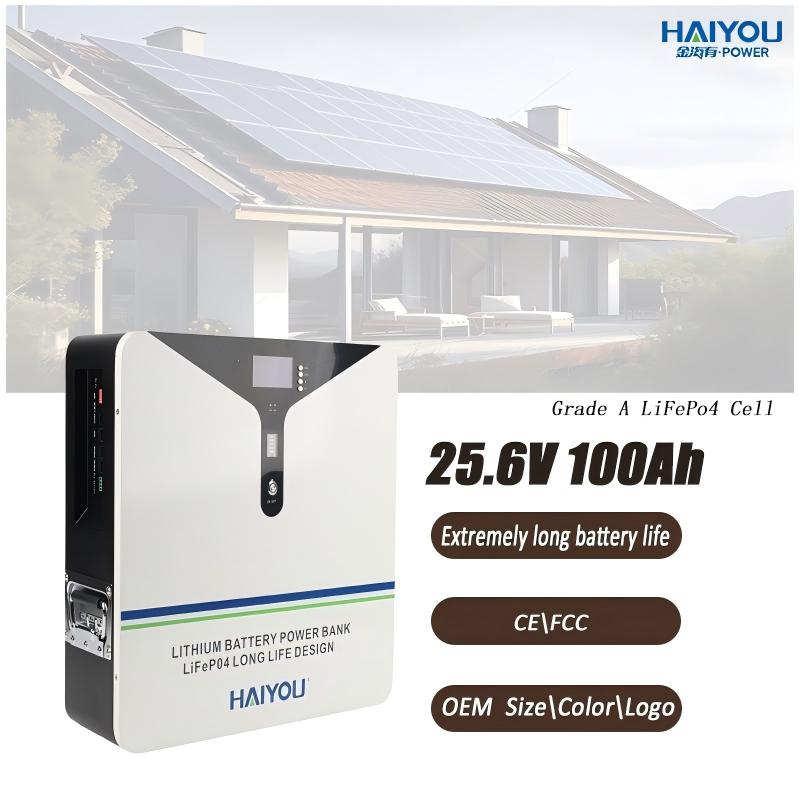
Image: HAIYOU battery product overview. Source: HAIYOU company materials.
Have Questions or Need More Details?
Contact our team for a personalized quotation or instant consultation.
Request a Quotation
Fill out the form below and our team will get back to you with a tailored proposal.
WhatsApp Direct Chat
Prefer to chat in real-time? Message us on WhatsApp for instant assistance & quick answers.
- Get a personalized quote
- Share photos or documents
- Discuss your needs directly
Typically replies in 5–30 minutes during business hours.