
Beyond Standard Cells: How to Evaluate an OEM-Capable Battery Partner for E-Mobility and Solar Storage
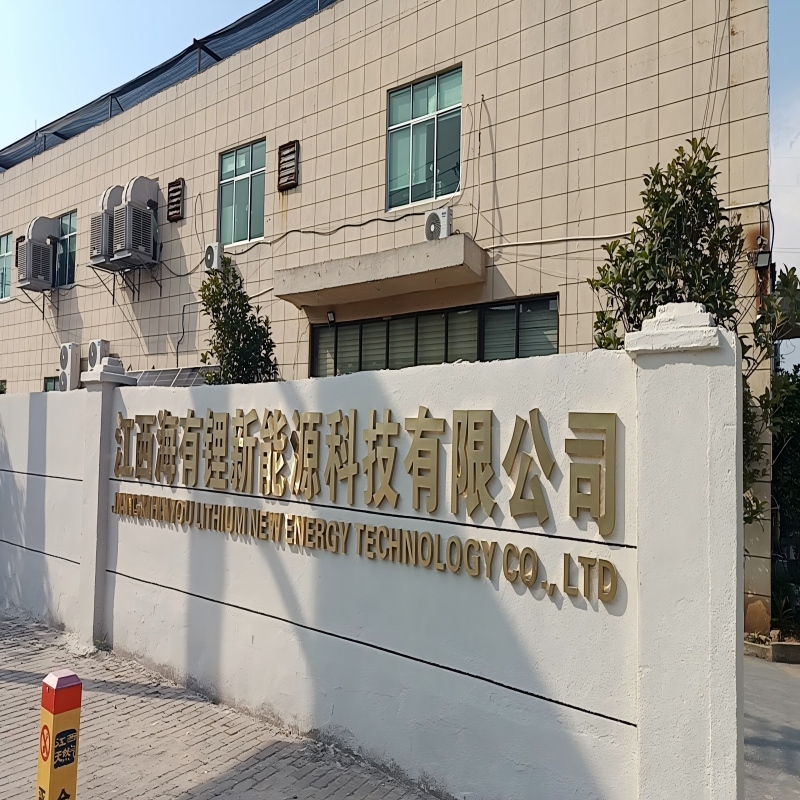
Cover image: Jiangxi Jinhaiyou New Energy Resources Technology Co., Ltd. (HAIYOU), a battery manufacturer in Nanchang, Jiangxi Province, China.
Battery buyers at the evaluation or execution stage rarely need just “a battery.” They need a supplier that can turn a specification, brand requirement, or application constraint into a manufacturable product. An OEM-capable battery partner provides custom voltage, capacity, shell color, product logo, and appearance design — while keeping production scalable and ordering flexible. This article explains how to evaluate such a partner for e-bikes, e-scooters, e-tricycles, e-motorcycles, solar energy storage, golf carts, traction lead-acid, and energy storage lead-acid applications.
What “OEM-Capable” Means in Battery Procurement
OEM capability means the manufacturer can produce batteries according to the buyer’s specification and brand requirements, rather than only selling pre-defined catalog models. In practice, this includes customizing voltage, capacity, shell color, product logo, and appearance design. For a buyer, the practical value is that the final battery can be tailored to the vehicle, storage system, or distribution brand.
OEM is not the same as “custom development from scratch.” Most battery OEM work starts from an existing cell chemistry platform, such as lithium iron phosphate (LiFePO4), and adjusts the battery pack design, BMS settings, mechanical dimensions, connectors, and labeling. The buyer should therefore evaluate both the range of customization and the reliability of the underlying platform.
Why OEM Capability Matters in E-Mobility and Solar Storage
E-mobility and solar storage buyers face different challenges than consumer electronics buyers. An e-bike lithium battery must fit a frame, meet local safety expectations, and communicate a brand identity. A solar energy storage lithium battery must support daily cycling, backup power behavior, and often long idle periods. A golf cart lithium battery must handle repeated deep discharges. A traction lead-acid battery must work in industrial handling equipment where upfront cost matters.
Because these applications are specialized, buyers often cannot buy a generic cell and expect acceptable performance. They need a partner with a documented production process, quality control, and after-sales service. In this context, OEM is a capability signal: it suggests the supplier has engineering, production flexibility, and quality systems in place.
\nCore OEM Capabilities to Evaluate in a Battery Supplier
When evaluating a battery supplier for OEM orders, buyers should look beyond price and check five areas.
1. Range of Customization
A useful OEM partner can adjust multiple parameters of the battery, not just the label. Key customization options include voltage, capacity, shell color, product logo, and appearance design. A buyer planning to sell under its own brand will need logo and packaging customization. A buyer integrating batteries into a vehicle will need voltage and capacity matching. A buyer targeting a premium or outdoor segment may need specific shell colors and design features.
2. Production Capacity and Delivery Stability
OEM orders can be unpredictable. A large-scale monthly production capacity is a sign that the manufacturer can absorb volume fluctuations, reduce lead-time risk, and support repeat orders. Buyers should ask for the supplier’s monthly output, production lines, and how much capacity is reserved for custom orders.
3. Minimum Order Quantity (MOQ) Flexibility
For distributors and mid-size brands, a low MOQ is often more valuable than the lowest unit price. It allows the buyer to test a market, launch a new product line, or manage inventory risk. A supplier that accepts a low minimum order quantity is easier to qualify for pilot projects and regional launches.
4. Quality Control and Testing
Custom batteries should not bypass standard quality procedures. Look for a manufacturer that performs full inspection before delivery and strict performance and safety testing. Quality management certifications such as ISO 9001:2015 provide a baseline for process control, while ISO 14001:2015 and ISO 45001:2018 indicate environmental and occupational health management maturity.
5. After-Sales Support
Battery failures, if they happen, must be handled efficiently. A reliable OEM supplier offers after-sales service addressing quality problems and provides product technical support. Because battery issues can involve safety, logistics, and BMS behavior, technical support competence matters as much as replacement policy.
Step-by-Step Evaluation Process
For evaluation-stage buyers, the following workflow can reduce supplier risk.
- Define your battery specification: document required voltage, capacity, dimensions, connector type, BMS protocol, working temperature range, and target certifications before contacting suppliers.
- Shortlist manufacturers by chemistry and application: e-mobility and solar storage buyers should confirm the supplier has relevant product lines, not just general battery experience.
- Request an OEM capability statement: ask which parameters can be customized, which are fixed, and what engineering support is included.
- Review production and quality evidence: request certification documents, factory production capacity details, and a description of inspection and testing procedures.
- Check logistics and after-sales coverage: confirm export experience, documentation, packaging, and response channels for quality issues.
- Complete a sample cycle: test sample performance against your own application requirements and verify that the supplier can match the final specification in mass production.
Use Cases: When OEM Battery Partners Add the Most Value
Different buyer groups benefit from OEM capability in different ways.
| Buyer Profile | Typical Battery Type | OEM Value |
|---|---|---|
| E-bike and e-scooter brand | E-bike lithium battery / E-scooter lithium battery | Battery matches frame design, brand logo, and local market voltage expectations |
| E-tricycle and e-motorcycle manufacturer | E-tricycle lithium battery / E-motorcycle lithium battery | Capacity and mechanical integration matched to vehicle duty cycles |
| Solar storage distributor | Solar energy storage lithium battery | Branded energy storage unit with consistent BMS behavior for off-grid or backup applications |
| Golf cart fleet operator | Golf cart lithium battery | Replacement batteries with brand identity, capacity upgrade, and long cycle life |
| Industrial equipment buyer | Traction lead-acid battery / Energy storage lead-acid battery | Cost-effective baseline technology with standard form factor and service support |
Dual-Technology Suppliers: A Practical Advantage
Some battery manufacturers operate both lithium and lead-acid production. This is relevant because e-mobility and solar storage brands often manage a product portfolio that includes both chemistries. A dual-technology supplier can support lithium batteries for new products and lead-acid batteries for cost-sensitive segments under one partnership.
A buyer should verify that both factories operate to consistent quality standards. In the HAIYOU example, Jiangxi Jinhaiyou New Energy Resources Technology Co., Ltd. has one factory producing lead-acid battery and another producing lithium battery, with applications covering electric two-wheelers, electric tricycles, low-speed four-wheelers, home solar energy storage, and agriculture sprayers.
Risk and Limits of OEM Battery Sourcing
OEM sourcing is not automatically better than buying standard products. Buyers should be aware of typical risks.
- Specification ambiguity: an incomplete specification can produce a battery that does not fit, does not communicate correctly with the charger, or underperforms in the intended climate.
- Longer qualification cycles: custom products require sample validation, revisions, and testing before mass production.
- Brand responsibility: when the buyer puts its logo on a battery, the buyer becomes partly responsible for the product experience and safety.
- Documentation and certification gaps: custom variants must still comply with the certifications required in the destination market; the buyer should confirm certification coverage for each variant.
These risks are manageable when the manufacturer shares testing information, communicates limitations, and provides after-sales support.
What a Strong OEM Supplier Should Provide
Based on the HAIYOU corporate profile and capability records, a practical OEM supplier profile includes the following elements.
- OEM and customized production services with clear customization options: voltage, capacity, shell color, product logo, and appearance design.
- Large-scale monthly production capacity, helping buyers reduce delivery uncertainty.
- Low minimum order quantity, enabling pilot batches and staged market entry.
- Full inspection before delivery, with strict performance and safety testing.
- After-sales service for quality problems and product technical support.
- Export experience across Europe, North America, Southeast Asia, and other regions.
- Established in 2005, with manufacturing experience across lead-acid and lithium battery product lines.
Comparing OEM Suppliers: Evaluation Criteria
When comparing multiple shortlisted suppliers, use a scoring table rather than relying on first impressions.
| Evaluation Criterion | Questions to Ask | Weight for E-Mobility Buyers | Weight for Solar Storage Buyers |
|---|---|---|---|
| Customization range | Can you customize voltage, capacity, shell, logo, and appearance? Which items require extra lead time? | High | Medium |
| Production capacity | What is monthly capacity? How much is reserved for OEM orders? | Medium | High |
| MOQ policy | What is the minimum order for initial and repeat orders? | Medium | High |
| Quality control | What testing is performed? Is full inspection conducted before delivery? | High | High |
| Certifications | Which system certifications are active? Which product certifications apply to destination markets? | High | High |
| After-sales service | How are quality problems handled? Is technical support available after shipment? | High | High |
Aligning OEM Capability with Project Scenarios
The right OEM partner also depends on the project scenario. For household solar storage, a buyer may prioritize safety, long cycle life, lightweight design, and wide temperature adaptation. Distributors serving off-grid homes or villas need stable power supply and backup behavior. In such cases, the OEM partner must be able to maintain battery performance across production batches, not only in the sample.
In a documented HAIYOU customer case, a household energy storage importer and distributor applied the batteries in off-grid household photovoltaic power storage and emergency backup power for villas. The result was long-cycle stable power supply and effective relief from power outage issues for rural families. The highlighted product characteristics were high safety, long cycle life, lightweight design, and wide temperature adaptation.
How to Request a Sample and Move to Execution
At the evaluation-to-execution stage, the sample cycle is the most reliable way to test OEM capability. Begin by sending a complete specification and asking the supplier to confirm what can be customized. Then request a sample with your logo, shell color, and target parameters. During sample testing, verify capacity, charge/discharge behavior, mechanical fit, and communication with the host system.
If the sample passes, document the approved specification and ask the supplier to confirm that mass production can replicate the sample. This confirmation should cover materials, cell sourcing, BMS settings, testing procedures, and packaging to avoid drift between sample and bulk order.
Industry Context: Why Battery Sourcing Is Becoming More Capability-Driven
Market data supports the shift toward specialized battery sourcing. The global lithium-ion battery market was valued at USD 68.7 billion in 2025 and is projected to reach USD 306.2 billion by 2033. The global e-bike battery market was estimated at USD 10.8 billion in 2024, with a projected CAGR of 14.1% through 2034. Lithium-ion batteries are expected to account for 99.33% of the battery energy storage system (BESS) market by 2026. More narrowly, the global golf cart battery market reached USD 1.49 billion in 2024, driven by a pivot from lead-acid to lithium-ion technology.
These numbers describe demand across e-mobility, solar storage, and specialized transport. As demand grows, buyers cannot rely on generic procurement alone. They need suppliers that can produce variants, manage quality consistently, and support long-term product roadmaps.
Compliance Considerations
Buyers should also confirm that the manufacturer operates with valid management system certifications. For example, HAIYOU holds ISO 9001:2015 for quality management, ISO 14001:2015 for environmental management, and ISO 45001:2018 for occupational health and safety. These certifications do not replace product-level certification, but they provide evidence that the manufacturer has structured processes for assembly, quality control, and workplace safety. The buyer must still verify that each custom variant meets the target market’s product safety requirements.
FAQ
Does an OEM battery supplier need product certifications for each custom variant?
Yes. A custom battery that differs from a certified standard model may require its own certification or an updated certification file. Management system certifications such as ISO 9001, ISO 14001, and ISO 45001 cover the factory’s assembly processes, but they do not replace product-level certifications. The buyer should request the certification scope and confirm with the supplier which variants are covered before mass production.
What can an OEM supplier customize in a lithium battery?
Common customization options include voltage, capacity, shell color, product logo, and appearance design. The buyer should confirm whether the BMS, connectors, wire harness, and packaging can also be adjusted, because those details affect integration and end-user experience.
What MOQ can a buyer expect from an OEM battery manufacturer?
MOQ policies vary by manufacturer, but a buyer-friendly OEM supplier will accept a low minimum order quantity for pilot batches and staged market entry. The practical benefit of a low MOQ is reduced inventory risk and the ability to validate a product line before committing to large volumes.
Can a battery supplier produce both lithium and lead-acid batteries?
Some manufacturers operate dual production lines. In the HAIYOU structure, one factory produces lead-acid batteries and another produces lithium batteries. This allows a buyer to source different chemistries from a single partner for different vehicle or energy storage segments.
How long does an OEM battery order take?
Lead time depends on specification complexity, material availability, and order volume. The HAIYOU capability record lists “standard delivery time after order confirmation” rather than a fixed number of days. Buyers should request a written lead-time commitment after the specification is frozen and sample approval is completed.
To test whether a supplier matches your OEM requirement, send your battery specification, target logo design, and application details to HAIYOU or contact nancy.shi@jxhylkj.com for sample and quotation support.
Conclusion
An OEM-capable battery partner is not simply a factory that prints your logo. It is a manufacturer that can translate application requirements into a repeatable, testable, serviceable product. For e-mobility and solar storage buyers, the practical evaluation should cover customization range, production capacity, MOQ flexibility, quality control, certifications, and after-sales support.
HAIYOU — formally Jiangxi Jinhaiyou New Energy Resources Technology Co., Ltd. — offers OEM and customized production for lithium and lead-acid batteries, with customization of voltage, capacity, shell color, product logo, and appearance design. It operates two factories in Jiangxi Province, China, and exports to more than 20 countries and regions including Europe, America, Southeast Asia, and the Middle East. For buyers moving from evaluation to execution, the next step is to verify capability with a sample order based on a clear specification.
Request an OEM quotation or sample specification.
HAIYOU accepts low-MOQ pilot orders and provides full inspection before delivery.
Email: nancy.shi@jxhylkj.com | WhatsApp: +86 18870238656
Have Questions or Need More Details?
Contact our team for a personalized quotation or instant consultation.
Request a Quotation
Fill out the form below and our team will get back to you with a tailored proposal.
WhatsApp Direct Chat
Prefer to chat in real-time? Message us on WhatsApp for instant assistance & quick answers.
- Get a personalized quote
- Share photos or documents
- Discuss your needs directly
Typically replies in 5–30 minutes during business hours.