
HAIYOU Battery Overview: Chemistry and Application Basics for Buyers
Industrial battery procurement often begins before a buyer has a shortlist. At the awareness and research stage, the priority is to understand what battery types exist, how chemistry and electrical parameters relate to real applications, and what a manufacturer’s portfolio can support. This article provides a foundational overview of battery options for electric mobility and solar storage, using the HAIYOU battery portfolio from Jiangxi Jinhaiyou New Energy Resources Technology Co.,Ltd as a concrete reference. It covers product categories, key parameters, application scenarios, and the first steps buyers can take toward a sample or quote discussion.
Problem Definition
Battery selection is not a single decision. A lithium battery for an electric two-wheeler is not interchangeable with an energy storage battery for a home solar system. Voltage, capacity, chemistry, and mechanical environment all affect performance and procurement risk. Buyers often face unclear comparisons because they compare only technology labels—lithium versus lead-acid—without first defining the application, voltage range, and duty cycle. This article addresses that early-stage confusion by clarifying the main product categories and decision inputs available in the HAIYOU range.
For buyers at the research stage, the key question is not “which battery is best” in general. The more useful question is which battery profile fits a specific e-mobility or solar storage use case. The answer depends on chemistry choice, electrical configuration, operating environment, and supplier capability.
Industry Background
The market context for battery procurement is shaped by continued growth in lithium-ion demand. According to Grand View Research, the global lithium-ion battery market was valued at USD 68.7 billion in 2025 and is projected to reach USD 306.2 billion by 2033. This broad trajectory includes multiple application segments relevant to industrial buyers.
Within electric mobility, the global e-bike battery market size was estimated at USD 10.8 billion in 2024, with a projected CAGR of 14.1% through 2034. For energy storage, lithium-ion batteries are expected to account for 99.33% of the battery energy storage system (BESS) market by 2026, according to Fortune Business Insights. These figures indicate that lithium-based options are becoming dominant across both mobility and stationary storage, but they do not eliminate lead-acid demand. Maximize Market Research reports that the traction battery market was valued at USD 43.29 billion in 2024, with lead-acid variants remaining popular in industrial sectors due to cost-effectiveness.
Buyers evaluating light electric vehicles should also note that UL 2271 is the primary safety standard for lithium-ion batteries used in light electric vehicles, including e-bikes and e-scooters, in North America. This standard matters for compliance checks, even at the early research stage.
Detailed Solution: HAIYOU Battery Portfolio
Company Overview
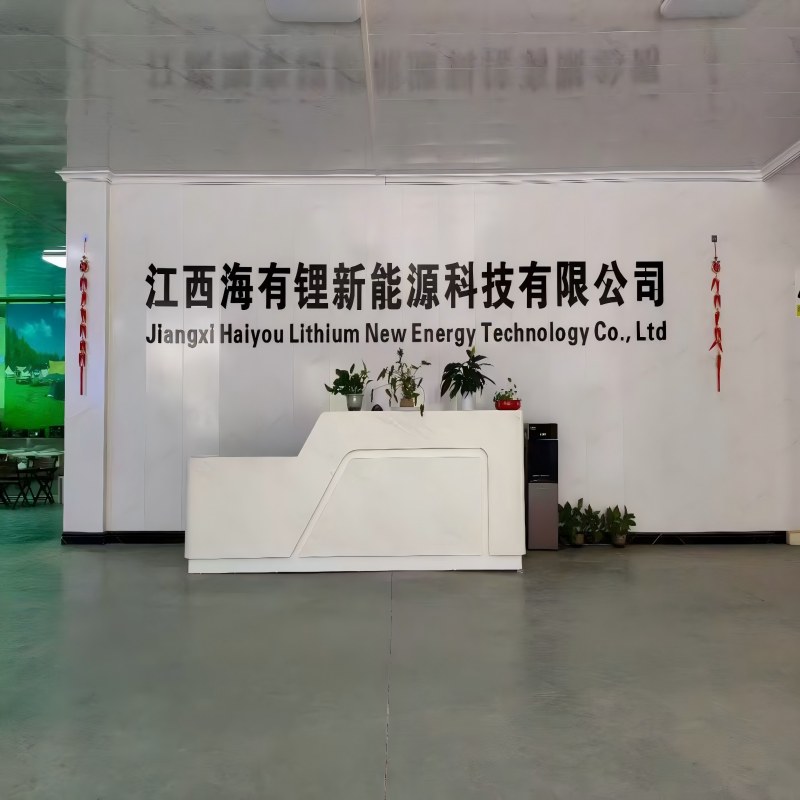
Jiangxi Jinhaiyou New Energy Resources Technology Co.,Ltd was established in 2005. The company operates two factories, one for lead-acid battery production and one for lithium battery production. Its facilities cover an area of 4 acres and are located in Jiangxi Province, China, with convenient transportation. The company has passed a number of system certifications and owns many patents. It exports its products to more than 20 countries and regions.
The product range includes rack-mounted lithium batteries, household lithium iron phosphate energy storage batteries, lithium batteries for two-wheeled electric vehicles, and lithium batteries for tricycles and low-speed four-wheel vehicles. Applications of the company’s batteries include electric two-wheelers, electric tricycles, electric low-speed four-wheelers, home solar energy storage, and agriculture sprayers.
Power Battery for Electric Two-Wheeler
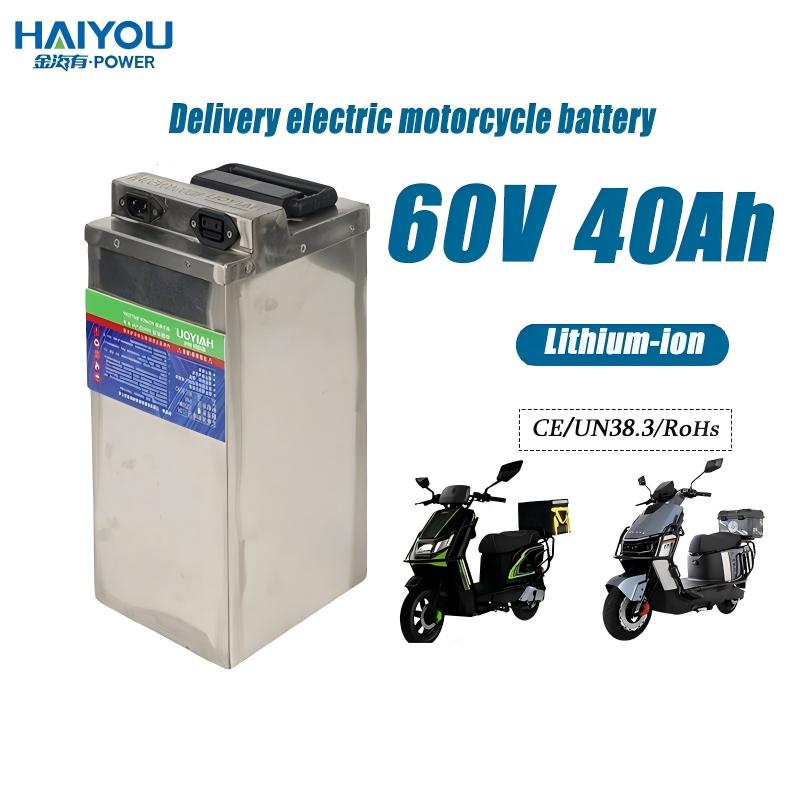
The electric two-wheeler power battery is a lithium battery intended for the electric vehicle industry. It is designed for electric two-wheeler applications and is suitable for electric two-wheeler vehicles. Buyers can consider this product category for e-bike and e-scooter projects where a compact lithium solution is required.
Key parameters from the provided product data include a voltage range of 48V, 60V, or 72V and a capacity range of 20Ah, 30Ah, or 40Ah. The chemistry options are NCM or LFP. The basic shell material is industrial plastic with a metal frame, and the internal core is a lithium ion cell.
Power Battery for Electric Tricycle & Low-speed Four-Wheeler
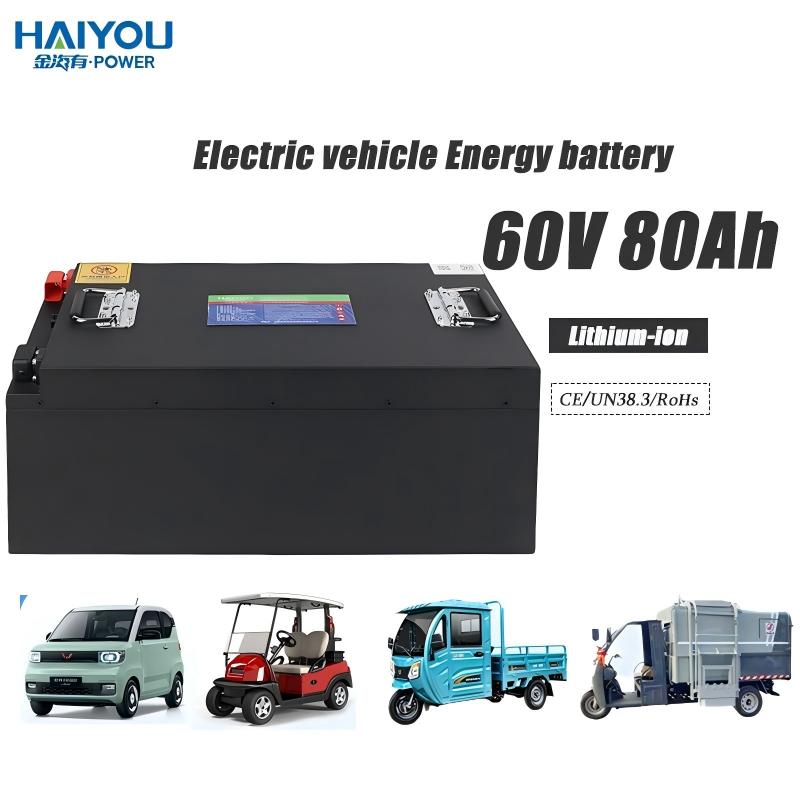
HAIYOU also offers a power battery specifically classified under the Lithium Battery for Electric Tricycle & Low-speed Four-wheeler category. This product is a lithium battery with LFP chemistry. It is designed for electric tricycle and low-speed four-wheeler applications and is intended for the electric vehicle industry.
The voltage range is 60V or 72V. The capacity range includes 80Ah, 100Ah, 180Ah, and 300Ah. The chemistry type is LFP. The cathode material is lithium iron phosphate, the basic shell material is industrial plastic and metal frame, and the internal core is a lithium ion cell.
Household Energy Storage Battery
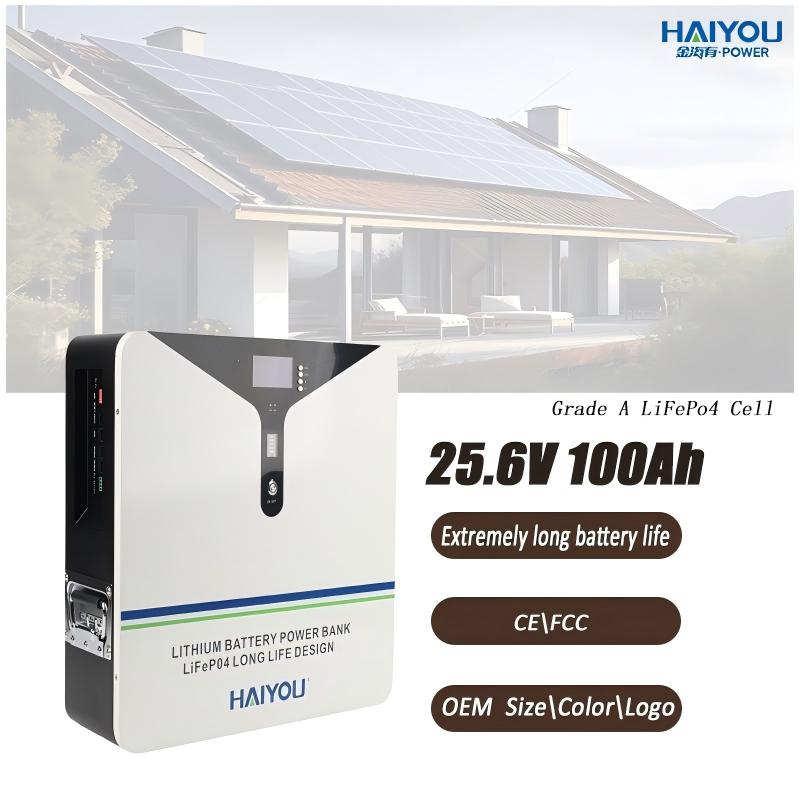
For residential and solar storage applications, HAIYOU provides household energy storage lithium batteries. These products are designed for use in household energy storage scenarios. Two configuration types appear in the provided product data.
The first configuration is defined by rated voltage and capacity. It offers 12V or 24V rated voltage and 100Ah, 200Ah, or 300Ah rated capacity. The chemistry is LFP. The second configuration is defined by rated energy range. It offers 2.56KWh, 5.12KWh, 10KWh, 14KWh, and 16KWh options. The chemistry is also LFP.
Both configurations use a lithium iron phosphate cathode, an industrial plastic and metal frame basic shell, and a lithium ion cell internal core. These batteries are suitable for home solar energy storage and related residential energy applications.
Lead-Acid Production Capability
In addition to lithium products, the company operates a lead-acid battery factory. This dual-factory structure means buyers can discuss both lithium and lead-acid options within one supplier relationship. Lead-acid can remain relevant for some industrial traction and energy storage applications, particularly where cost-effectiveness is a primary consideration. However, specific lead-acid product parameters are not detailed in this overview, so buyers should request model-level specifications for their application.
Step-by-Step Breakdown for First-Stage Battery Evaluation
At the awareness and research stage, a structured first pass can reduce procurement risk. The following steps organize the evaluation without assuming that one chemistry or configuration is universally correct.
- Define the application clearly. Identify whether the battery will be used in an electric two-wheeler, electric tricycle, low-speed four-wheeler, home solar energy storage system, agriculture sprayer, or another scenario. This determines the product category.
- Confirm the appropriate chemistry. For household energy storage and electric tricycle or low-speed four-wheeler applications in the HAIYOU portfolio, LFP chemistry is specified. For electric two-wheeler applications, NCM or LFP options are available. Lead-acid may be considered for cost-sensitive traction or energy storage projects.
- Match voltage and capacity or energy range. For electric two-wheelers, review 48V/60V/72V and 20Ah/30Ah/40Ah combinations. For electric tricycles and low-speed four-wheelers, review 60V/72V and 80Ah/100Ah/180Ah/300Ah combinations. For household storage, review either 12V/24V voltage with 100Ah/200Ah/300Ah capacity or 2.56KWh to 16KWh energy options.
- Check environmental and mechanical requirements. Consider temperature, dust, vibration, and mounting conditions. For example, agricultural applications may involve outdoor open-air working, high temperature, dust, and frequent vibration.
- Assess supplier capability. Confirm that the manufacturer has relevant factory resources and quality systems. Jiangxi Jinhaiyou operates two factories, has passed a number of system certifications, and owns many patents.
- Move toward sample and quote discussion. Once the product category and basic parameters are clear, the next practical step is to contact the manufacturer for model-level confirmation and sample feasibility.
Use Cases and Application Logic
HAIYOU batteries appear in several application types. One example from the provided application data is the agriculture and garden industry. In this scenario, the working condition is outdoor open-air operation with high temperature, dust, and frequent vibration. The project type is described as an off-grid residential solar energy storage project. The function is to store electric energy, provide stable DC power output, power equipment continuously, and support emergency backup. Matched equipment includes backpack agricultural sprayers, water pumps, and irrigation motors. The special requirement notes long cycle life of at least 6000 times and stable performance under frequent vibration.
This example shows why application detail matters. A household energy storage battery may need different electrical behavior than a two-wheeler power battery, even if both are lithium-based. Buyers who ignore duty cycle or mechanical environment can select a product that works in theory but underperforms in the field.
Other use cases from the company’s product range include electric two-wheelers, electric tricycles, electric low-speed four-wheelers, and home solar energy storage. Rack-mounted lithium batteries are also part of the portfolio, providing another form factor for energy storage installations.
Comparison Table: HAIYOU Battery Categories at a Glance
| Battery Category | Voltage / Capacity / Energy Range | Chemistry | Typical Application Examples |
|---|---|---|---|
| Electric two-wheeler power battery | 48V / 60V / 72V; 20Ah / 30Ah / 40Ah | NCM or LFP | Electric two-wheelers |
| Electric tricycle & low-speed four-wheeler power battery | 60V / 72V; 80Ah / 100Ah / 180Ah / 300Ah | LFP | Electric tricycles, low-speed four-wheelers |
| Household energy storage battery, capacity model | 12V / 24V; 100Ah / 200Ah / 300Ah | LFP | Household energy storage |
| Household energy storage battery, energy model | 2.56KWh / 5.12KWh / 10KWh / 14KWh / 16KWh | LFP | Home solar energy storage |
| Lead-acid battery production capability | Factory capability; detailed parameters not listed in this overview | Lead-acid | Industrial traction and energy storage contexts |
This table is intentionally limited to facts from the provided product and company data. Buyers should request model-specific specification sheets before making sourcing decisions.
Frequently Asked Questions
What compliance and certification factors should buyers evaluate for HAIYOU batteries?
Jiangxi Jinhaiyou New Energy Resources Technology Co.,Ltd has passed a number of system certifications and owns many patents. Buyers evaluating light electric vehicle batteries in North America should also be aware that UL 2271 is the primary safety standard for lithium-ion batteries used in light electric vehicles, including e-bikes and e-scooters. Compliance should be confirmed at the specific model level before procurement.
What product capability does HAIYOU offer for e-mobility and solar storage?
The company operates two factories, one for lead-acid battery production and one for lithium battery production. Its product range includes lithium batteries for two-wheeled electric vehicles, lithium batteries for tricycles and low-speed four-wheel vehicles, household lithium iron phosphate energy storage batteries, and rack-mounted lithium batteries. Applications include electric two-wheelers, electric tricycles, electric low-speed four-wheelers, home solar energy storage, and agriculture sprayers.
How should buyers think about battery budget at the research stage?
The provided data does not include pricing. Buyers can instead focus on configuration and chemistry because those choices affect total cost over time. LFP chemistry is specified for household energy storage and electric tricycle or low-speed four-wheeler products. NCM or LFP options are available for electric two-wheelers. Lead-acid may remain cost-effective in some industrial traction or energy storage contexts. Budget discussions should follow a clear definition of voltage, capacity, and duty cycle.
How can a buyer start a sample or quote discussion for HAIYOU batteries?
Buyers can contact Jiangxi Jinhaiyou New Energy Resources Technology Co.,Ltd through the company website or the listed contact channels. The website is https://www.jxhylkj.com. Email contact is nancy.shi@jxhylkj.com. A sample or quote discussion should include the application, required voltage and capacity or energy range, and any special environmental conditions.
How can a buyer clarify lead time for a battery order?
Lead time is not fixed in the provided data and will depend on product configuration, order quantity, and current production scheduling. The most direct way to clarify lead time is to contact the manufacturer with the intended battery category and parameter requirements. Jiangxi Jinhaiyou operates two factories, but buyers should confirm production timing for their specific model and volume. You can use the website contact form or email nancy.shi@jxhylkj.com to request updated lead time information.
Conclusion
At the early research stage, battery procurement should focus on application definition, chemistry selection, and electrical parameter matching. The HAIYOU portfolio from Jiangxi Jinhaiyou New Energy Resources Technology Co.,Ltd spans lithium and lead-acid production, with product categories for electric two-wheelers, electric tricycles and low-speed four-wheelers, household energy storage, and rack-mounted energy storage. Buyers can use this overview as a first-pass reference and then move toward model-level confirmation.
For the next step, contact the HAIYOU team to discuss your required battery type, voltage, capacity, or energy range. Visit https://www.jxhylkj.com or email nancy.shi@jxhylkj.com to request a quote or inquire about sample availability.
Have Questions or Need More Details?
Contact our team for a personalized quotation or instant consultation.
Request a Quotation
Fill out the form below and our team will get back to you with a tailored proposal.
WhatsApp Direct Chat
Prefer to chat in real-time? Message us on WhatsApp for instant assistance & quick answers.
- Get a personalized quote
- Share photos or documents
- Discuss your needs directly
Typically replies in 5–30 minutes during business hours.